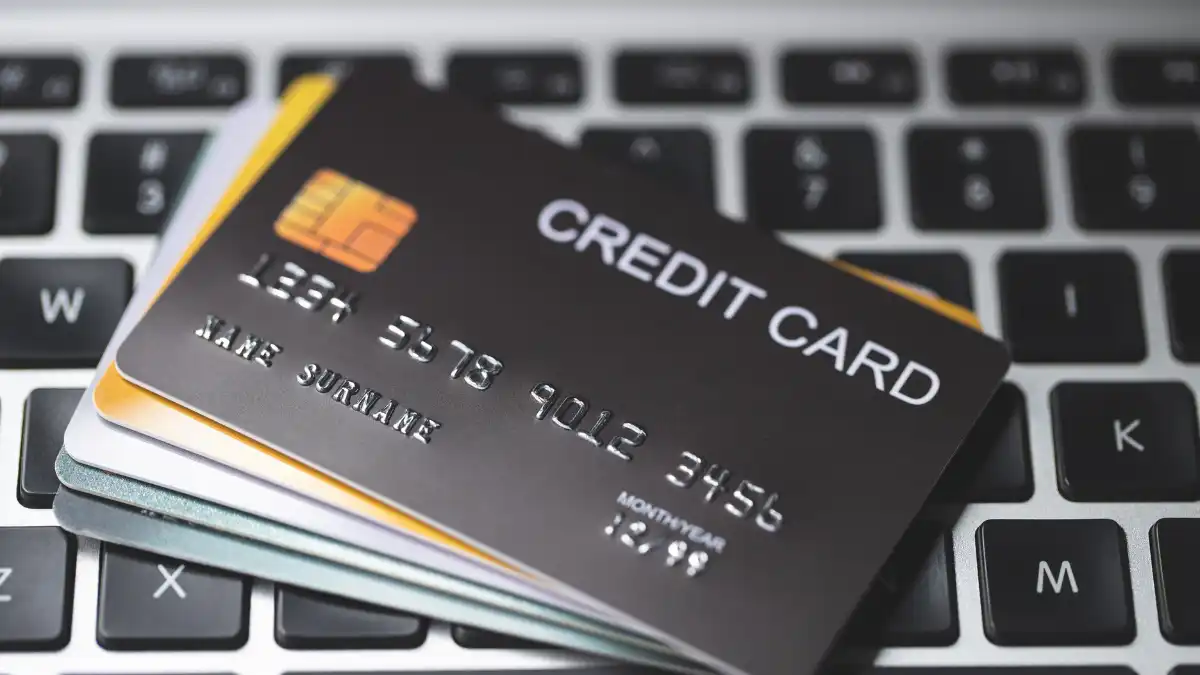
A credit card is a payment card issued by a bank that lets you borrow money, up to a limit the bank sets, to pay for purchases now and repay later. If you clear the full amount by your due date, most cards charge you nothing extra for that borrowing. If you don’t, interest starts adding up on whatever balance you carry forward. That one mechanic, spend the bank’s money first, repay it on a schedule, is the entire idea behind how a credit card works, and everything else, rewards, fees, credit scores, builds on top of it.
What is a Credit Card and Meaning
Think of it as a line of short-term credit the bank extends to you. Suppose ₹50,000 you get a card with a set limit. Every time you use it, that purchase amount is deducted from your available limit, not from your bank account. At the end of a fixed period, usually around 30 days, called the billing cycle, the bank totals up everything you spent and sends you a bill. You then choose to pay it in full or pay only part of it, with different consequences for each choice, covered in detail below.
Parts of a Credit Card Explained
Every physical card carries the same core set of elements, even though the design varies by bank. Knowing what each one does helps you use the card safely:
- Card number: a 16-digit number unique to your card, used to identify the account for every transaction
- Cardholder’s name: printed exactly as registered with the bank
- Valid from / valid thru dates: the period your card is active, needed for online payments
- EMV chip: a small embedded processor that generates a unique code for each transaction, making it harder to clone the card
- Magnetic strip: an older technology some cards still carry, used for swiping
- Signature panel: where you sign on the back, some banks now waive this for chip-and-PIN cards
- CVV: a 3-digit security code on the back, required for most online payments
- Network logo: shows whether the card runs on Visa, Mastercard, or RuPay
- Contactless symbol: indicates the card supports tap-to-pay
Credit Card vs Debit Card: What’s the Difference?
This is the comparison most people actually need clarity on before anything else. Both cards look similar and work at the same terminals, but the money behind them comes from two completely different places.
A debit card spends money you already have. The moment you use it, the amount leaves your bank account. A credit card spends money the bank lends you. Your bank balance doesn’t move, the bank pays the merchant, and you owe that amount back by your due date.
| Feature | Credit Card vs Debit Card |
|---|---|
| Source of funds | Bank's credit line vs your own bank balance |
| When money moves | On repayment, by your due date vs immediately, at the time of purchase |
| Interest | Charged only if you don't pay the full bill by the due date vs No charge |
| Rewards and cashback | Common on most cards vs limited or none on most debit cards |
| Overspending risk | Higher, since you're spending borrowed money vs limited to your account balance |
| Effect of non-payment | Can affect your credit score and attract interest vs not applicable |
Are a Credit Card and an ATM Card the Same Thing?
No, and this is a common confusion. An ATM card is typically another name for a debit card, it’s linked to your bank account and lets you withdraw your own money from an ATM. A credit card can also be used at an ATM, but that’s called a cash advance, not a withdrawal, and it works very differently: you’re borrowing cash against your credit limit, and this usually starts accruing interest immediately, with no interest-free period the way purchases have. Treat credit card cash withdrawals as a last resort rather than a routine option.
How Credit Cards Work Step by Step Process
Once you have a card, the cycle from spending to repayment follows a consistent pattern. Here’s what actually happens at each stage:
Step 1: The bank sets your credit limit
When your card is approved, the bank assigns a credit limit based on your income, credit score, and overall financial profile. This is the maximum amount you can have outstanding at any time, not a monthly spending cap.
Step 2: You make a purchase
When you pay with the card, the bank settles the amount with the merchant on your behalf. That amount is added to your outstanding balance and subtracted from your available credit limit. Your bank account isn’t touched.
Step 3: Transactions accumulate over the billing cycle
A billing cycle is the period, typically around 30 days, during which the bank tracks all your transactions. Every purchase in that window gets grouped into a single statement at the end of the cycle.
Step 4: The bank generates your statement
Once the cycle closes, you receive a statement showing your total spend, the minimum amount due, the full amount due, and your payment due date, usually 15 to 20 days after the statement date.
Step 5: The interest-free period applies if you pay in full
The window between your purchase and your due date is when most cards charge no interest at all, provided you clear the entire statement balance. This interest-free period commonly runs between 20 and 50 days depending on when in the billing cycle you made the purchase, it isn’t a fixed number for every transaction.
Step 6: You choose how much to pay
Paying the full statement balance means no interest. Paying only the minimum amount due avoids a late payment penalty, but the bank starts charging interest on the remaining balance, and that interest typically applies from the transaction date, not from the due date, which is why carrying a balance gets expensive quickly.
Step 7: Your credit limit resets as you repay
As you pay down what you owe, your available credit limit goes back up by the same amount. This repeating cycle of spend, repay, spend again is what’s referred to as revolving credit.
What Is a Finance Charge and How Is It Calculated?
A finance charge is the umbrella term for what carrying a balance actually costs you, it can include interest, and sometimes other fees tied to borrowing. Per the Reserve Bank of India’s Master Direction on Credit Card and Debit Card Issuance, card issuers are required to disclose their applicable Annual Percentage Rate clearly and cannot change fees or charges without prior notice to cardholders. Most Indian card issuers calculate interest using the average daily balance method, applied daily rather than just once a month, which is part of why unpaid balances grow faster than people expect.
Here’s the general logic, using illustrative numbers rather than any specific card’s actual rate:
- The annual interest rate is divided by 365 to get a daily rate
- That daily rate is applied to your outstanding balance for each day it remains unpaid
- These daily charges are added up over the billing cycle and appear as a single finance charge on your next statement
Actual annual interest rates on Indian credit cards commonly fall in a high range, often 30% to 45% per year depending on the card and issuer, which is why paying only the minimum due, month after month, can become expensive far faster than the headline monthly percentage suggests. Always check the exact rate on your own card’s terms rather than assuming a figure.
What Is the Unbilled Amount on a Credit Card?
Your billing cycle has a fixed cutoff date. Any transaction you make after that cutoff, but before your next statement is generated, shows up as an unbilled amount, spending that’s happened but hasn’t been added to a bill yet. It isn’t something you owe immediately, it will simply appear on your next statement. This matters mainly if you’re tracking how close you are to your credit limit, since unbilled transactions still count against your available limit even before they’re formally billed.
Types of Credit Cards and Their Features
Banks design different cards around different spending habits. Here are the categories you’ll most commonly come across in India:
Rewards cards
These earn points on your spending, redeemable later for vouchers, merchandise, or travel bookings. The rate varies significantly by card and category, for instance, our review of the SBI SimplyCLICK Credit Card breaks down exactly how its accelerated online-shopping rewards work in practice, including the caps that apply.
Cashback cards
Instead of points, these return a percentage of your spending directly, often with a monthly cap. Our SBI Cashback Credit Card review covers a real example, including how the cap and eligible categories actually work, not just the headline rate.
Travel cards
Built around frequent flyers, these typically add airport lounge access, travel insurance, and accelerated rewards on flight or hotel bookings, usually at a higher annual fee. Our review of the SBI Elite Credit Card walks through what a mid-premium travel card actually includes, and where the fee tends to pay for itself.
Fuel cards
Co-branded with fuel companies, these offer a fuel surcharge waiver and accelerated rewards specifically at partner pumps. Our BPCL SBI Card review shows how the value-back on fuel is actually calculated, and how a recent fee-waiver change affected the numbers.
Co-branded cards
Tied to a specific retail or travel brand, these reward spending within that ecosystem at a higher rate than general spending. Our Reliance SBI Card PRIME review is a useful example of how these brand-tied rewards work, and where they fall short if you don’t actually shop with that brand regularly.
Premium and super-premium cards
Aimed at higher spenders, these carry a higher annual fee in exchange for unlimited or near-unlimited lounge access, concierge-style perks, and lifestyle memberships. Our SBI Aurum Credit Card review looks honestly at where a super-premium card’s fee is genuinely justified, and where it isn’t.
Secured cards
Issued against a fixed deposit, these are built for people with no credit history. Your credit limit is typically a percentage of your FD amount, and there’s no income proof required in the usual sense, since the deposit itself secures the bank’s risk. This is often the most realistic entry point if you’ve been declined for a regular card.
Student cards
Designed for college students without a regular income, these come with low limits and are meant to build a credit history early rather than fund large spending.
Credit Card Benefits and Features
Beyond simply deferring payment, most cards bundle in a set of features that add real value if you use them intentionally:
- An interest-free period on purchases, provided you clear your statement in full
- Reward points, cashback, or both, depending on the card
- The ability to build a credit history through consistent, on-time repayment
- Wide acceptance for both domestic and international transactions
- Fraud protection features like OTP verification and instant transaction alerts
- The option to convert larger purchases into EMIs on many cards
Alternatives to a Credit Card
A credit card isn’t the only way to manage payments, and it isn’t the right fit for everyone. A few common alternatives:
- Debit card: spends only what’s in your bank account, no borrowing, no interest risk
- Prepaid card: you load a fixed amount in advance and can only spend up to that, useful for controlling a budget strictly
- UPI and mobile wallets: direct payments from your bank account, increasingly accepted as widely as cards for everyday transactions
- Buy-now-pay-later apps: split a purchase into instalments, often interest-free for a short period, though terms vary widely and missed payments can still hurt your credit profile
- Personal loans: better suited to larger, planned expenses than a credit card’s revolving structure
If credit card debt has been a genuine struggle for you in the past, a debit card or a prepaid card removes the borrowing risk entirely, at the cost of losing rewards and the interest-free window.
Credit Card Eligibility and Documents Required
Exact eligibility criteria vary by bank and by specific card, so treat the following as a general pattern rather than a guarantee for any one card:
- Age: commonly 18 or 21 years and above, depending on the bank and card type, with some banks setting an upper age limit as well
- Income: a stable income source, whether salaried, self-employed, or business income
- Credit score: most banks look for a reasonably healthy score, commonly cited around 700 to 750 and above, for standard unsecured cards, though this isn’t a fixed cutoff and approval decisions vary by issuer
- Residency: most standard cards require Indian residency
Documents typically requested include:
- Identity proof: Aadhaar, PAN, passport, voter ID, or driving licence
- Address proof: Aadhaar, a recent utility bill, or driving licence
- Income proof: salary slips, bank statements, or income tax returns, depending on employment type
Advantages and Disadvantages of Credit Cards
| Advantages | Disadvantages |
|---|---|
| Interest-free period if paid in full | High interest if a balance is carried |
| Rewards, cashback, and offers | Risk of overspending |
| Helps build credit history over time | Annual and other fees on many cards |
| Widely accepted, including internationally | Can lead to debt if used without discipline |
| Useful for genuine emergencies | Late payment penalties |
A credit card is a genuinely useful tool when the bill is paid in full and on time, consistently. The disadvantages above aren’t reasons to avoid a card altogether, they’re reasons to be deliberate about how you use one.
A Brief History of the Credit Card
The modern credit card traces back to the Diners Club card, launched in the United States in 1950, initially accepted at a small number of New York restaurants, as documented in Forbes Advisor’s history of credit cards. Bank of America introduced BankAmericard in 1958, which later became Visa in 1976. A separate group of banks formed what eventually became Mastercard around the same period.
In India, credit cards arrived considerably later, with Central Bank of India generally credited as the first Indian bank to launch a credit card, in 1980. Card technology and acceptance have expanded substantially since, particularly with the introduction of RuPay as a domestic network alternative.
Frequently Asked Questions
What is a credit card in simple words?
A credit card is a payment card that lets you borrow money from a bank, up to a set limit, to make purchases now and repay later. If you pay the full amount by your due date, most cards charge no interest on that borrowing.
Are a credit card and an ATM card the same?
No. An ATM card usually refers to a debit card, linked directly to your bank account. A credit card can be used at an ATM too, but withdrawing cash on it is treated as a cash advance, borrowed money that typically starts accruing interest immediately, unlike a debit card withdrawal.
Are credit cards good or bad?
Neither, on their own, it depends entirely on how they’re used. Paid in full and on time, a credit card offers an interest-free borrowing window, rewards, and a way to build credit history. Used carelessly, with balances carried forward regularly, the same card can lead to high interest costs and debt.
Can I withdraw money from my credit card?
Yes, through a cash advance at an ATM, but this usually comes with a separate fee and interest that starts accruing immediately, with no interest-free period. It’s generally a more expensive option than using the card for a purchase.
What is the purpose of a credit card?
Its core purpose is to let you pay for something now and settle the cost later, within a defined billing cycle. Beyond that, cards are also used to earn rewards, manage cash flow, build a credit history, and in some cases, convert larger purchases into instalments.
What happens if I use 90% of my credit limit?
Using that much of your available limit pushes your credit utilisation ratio very high, generally considered unfavourable for your credit score even if you pay your bill on time and in full. Most guidance suggests keeping utilisation under roughly 30% for a healthier credit profile, though the exact impact varies by individual credit history.
What is credit card full form or meaning of CC?
CC commonly stands for Credit Card. In some banking contexts, particularly for businesses, CC can also refer to Cash Credit, a different type of short-term borrowing facility, distinct from a personal credit card.
Conclusion
A credit card is, at its core, a short-term borrowing tool: the bank pays first, you repay on a schedule, and whether that arrangement works in your favour comes down almost entirely to whether you clear your statement in full each cycle. Understood and used that way, a credit card can offer real value through its interest-free period, rewards, and the credit history it helps build. Used without that discipline, the same features that make it convenient, easy access to money you don’t yet have, are exactly what make it expensive. Before choosing a specific card, it’s worth matching the card type to how you actually spend, rather than choosing based on the most attractive-looking welcome offer.
Disclaimer: This article is for general educational and informational purposes only and does not constitute financial advice. Credit card terms, interest rates, fees, and eligibility criteria vary by bank and by specific card, and are subject to change at the issuer’s discretion. Please verify current terms directly with the relevant bank or card issuer before applying for or using any credit card product.