If you want to know how to use credit card the right way, the short answer is this: spend only what you can repay from your next salary, pay the full bill before the due date, keep your usage well below your limit, and avoid taking cash on the card. Do these four things and a credit card works for you. Skip them, and it gets costly fast.
The 12 steps below turn that into a routine you can follow, from choosing a card to reading your statement. If you’re new to cards, it helps to first understand what a credit card is and how billing works.
Note: Bank fees and UPI rules in this article were checked as of now. They can change anytime, so confirm the latest terms in your card’s Most Important Terms and Conditions (MITC) and your bank’s app.
How to Use a Credit Card: Quick Summary
| Do | Don't |
|---|---|
| Pay the total amount due every month | Pay only the minimum due as a habit |
| Keep usage at around 30% of your limit or lower | Spend up to your full limit |
| Time big purchases just after your statement date | Buy big items a day before the statement |
| Use the card for planned spending | Spend extra to earn rewards |
| Turn on alerts for every transaction | Share your OTP, PIN, or CVV |
| Check your statement every month | Withdraw cash from an ATM with the card |
12 Practical Steps to Use a Credit Card Wisely
Step 1: Choose a Credit Card That Matches Your Spending
Using a card well starts with picking the right one. A card that doesn’t fit your spending is hard to get value from, however careful you are.
- Match the card to where your money goes. If you mostly shop online and buy groceries, a cashback card suits you better than a travel card with lounge access you’ll rarely use.
- Check the annual fee and the spend needed to waive it. A card with a fee can still cost you nothing if you cross the waiver target through normal spending.
- Look at the interest rate even if you plan to pay in full. You should know the cost if you ever carry a balance.
- Don’t apply for many cards at once. Each application adds a hard enquiry to your credit report, and several in a short time can lower your score.
Cards are built around different spending, so it’s worth knowing which card category rewards which kind of spend. Before you apply, also check the income and credit score banks usually ask for.
Step 2: Start Small If You’re Using a Credit Card for the First Time
If you’re learning how to use credit card for the first time, the goal for the first few months is to build habits, not to earn rewards.
- Begin with small, planned spends like a phone bill, fuel, or groceries. You’ll see how the billing cycle works before you put a large purchase on the card.
- Set your own spending cap well below the bank’s limit for the first few months.
- Pay your first bill in full, even if it’s small. This sets the habit that matters most.
- Turn on SMS and app alerts for every transaction from day one.
- Read your card’s MITC once. It lists your interest rate, fees, and billing dates in one place.
Step 3: Understand Your Billing Cycle and Due Date
Every card has a billing cycle of about a month. At the end of it, the bank makes your statement, and you get a due date a few weeks later. If you pay the full bill by that date, you pay no interest on your purchases.
This gives you an interest-free period of about 20 to 50 days, depending on when you buy. Here’s an example for a card with a statement date of the 5th and a due date of the 25th:
| Purchase Date | Shows Up in Statement Of | Due Date | Interest-Free Days |
|---|---|---|---|
| 6 October | 5 November | 25 November | About 50 days |
| 20 October | 5 November | 25 November | About 36 days |
| 4 November | 5 November | 25 November | About 21 days |
What this means for you:
- Find your statement date. It’s on every statement and in your bank’s app.
- Time large, planned purchases just after the statement date to get the longest time to pay.
- This works only if you pay the full bill. If you carry any balance, you lose the interest-free period on new purchases too.
Once a balance is carried, interest is counted daily. It’s useful to see how card interest adds up day by day before you ever need it.
Step 4: Use RuPay Credit Cards on UPI the Right Way
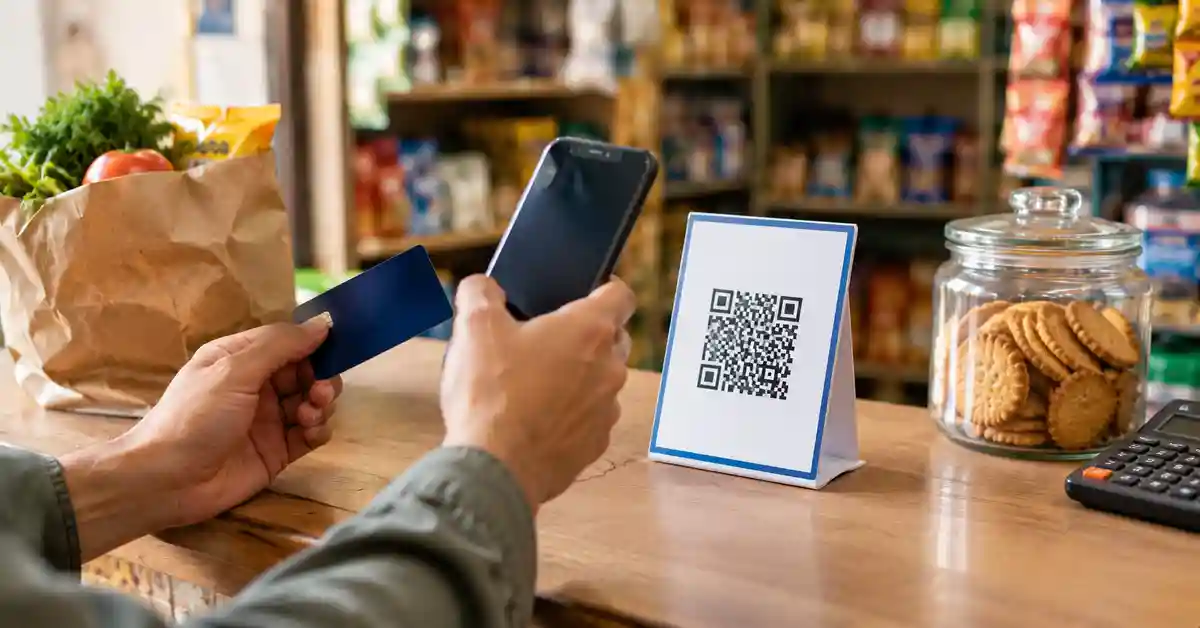
If you’ve wondered how to use a credit card for UPI payments, you need a RuPay credit card. You can link it to a UPI app and pay by scanning a shop’s QR code, without swiping the card. The money comes from your card’s credit limit, not your bank account, and the payment shows up on your credit card statement.
How to Link a RuPay Credit Card to Google Pay, PhonePe or Paytm
The steps for how to use credit card in GPay and other UPI apps are nearly the same. As per NPCI’s FAQ on RuPay credit cards on UPI:
- Open a UPI app that supports credit cards, such as Google Pay, PhonePe, Paytm, or BHIM.
- Go to the option to add a payment method and choose “Credit Card”.
- Select your bank. Your card will appear, based on the mobile number registered with the bank.
- Select the card and confirm.
- Set a UPI PIN using the last 6 digits of your card number and its expiry date.
Your UPI PIN is separate from your card’s ATM PIN.
What You Can and Can’t Pay for With a Credit Card on UPI
| Allowed | Not Allowed |
|---|---|
| Payments to shops and merchants by QR code | Sending money to friends or family |
| Online merchant payments | Transferring money to a bank account |
| Bill payments to merchants | Cash withdrawal |
A few more things to know:
- Limit. NPCI’s FAQ lists the UPI limit as ₹1 lakh a day, and higher for some merchant categories. Your real limit is the lowest of the UPI limit, your available credit, and any limit your bank sets.
- Charges. NPCI says customers aren’t charged for linking the card or for making payments. A surcharge can apply to some categories, like fuel.
- Billing. A UPI payment from your card is a normal card purchase. It follows the same due date and interest rules.
- Rewards. Some cards give fewer or no reward points on UPI spends. Check your card’s terms.
Step 5: Keep Your Credit Utilisation Under Control
Your credit limit is the most the bank lets you spend. It isn’t a target. The share of your limit you use is called credit utilisation, and credit bureaus look at it when working out your score.
A common benchmark is to keep usage at around 30% of your limit or lower:
| Credit Limit | 30% of Limit |
|---|---|
| ₹30,000 | ₹9,000 |
| ₹50,000 | ₹15,000 |
| ₹1,00,000 | ₹30,000 |
| ₹2,00,000 | ₹60,000 |
This 30% figure isn’t an RBI rule or a fixed cut-off. It’s a general guide: lower usage looks better than high usage. Going above it once in a while isn’t a problem. Staying close to your full limit month after month can pull your score down, even if you pay in full.
If your regular spending is close to your limit, you can pay part of the bill before the statement date, or ask the bank for a higher limit and keep your spending the same.
Step 6: Pay the Total Amount Due, Not Just the Minimum
Your statement shows two amounts: the total amount due and a much smaller minimum amount due. Paying only the minimum avoids a late fee, but interest keeps running on the rest.
For example, on an SBI Card with ₹50,000 carried forward, the first month’s minimum due works out to about ₹3,213. Only ₹1,000 of that reduces what you owe. The rest goes to interest and GST. You can see what paying only the minimum costs over the years with full tables.
The rule for everyday use is simple. Pay the total amount due every month. If you can’t in some month, pay as much above the minimum as you can.
Step 7: Pay Your Credit Card Bill the Right Way
How and when you pay matters as much as how much you pay.
- Set up auto-pay for the total amount due. Keep enough balance in your bank account on the debit date.
- Pay 2 to 3 days before the due date if you pay manually. Some payment methods take time to reach the card account.
- Pay online. UPI, net banking, and the bank’s app are free. SBI Card, for example, charges ₹250 for paying in cash at a branch and ₹200 for paying by cheque.
- Know the 3-day buffer. Under RBI’s card rules for banks, a bank can charge a late fee or report you as late only when the payment is more than 3 days past the due date. Treat this as a safety net, not extra time.
- Change your billing date if it doesn’t suit you. Banks must let you change your billing cycle at least once. A date just after your salary makes paying on time easier.
Step 8: Use Credit Cards for Fuel, Bills and Daily Expenses Carefully
Using your card for regular expenses is fine, as long as you’d spend that money anyway and can repay it in full.
- Fuel. Petrol pumps usually add a surcharge of about 1% on card payments. Many cards refund it, but only on transactions within a set range and up to a monthly cap. Check both on your card.
- Utility bills. Electricity, phone and broadband bills can be paid through your bank’s app. Some cards give rewards on these, and some charge a fee above a certain amount.
- Rent, wallet loads and education fees. Some banks charge about 1% on these when paid through third-party apps, and many cards give no rewards on them. Check the fee before you pay this way.
- Subscriptions. Keep a list of what’s on auto-debit. Small monthly charges are easy to forget.
Step 9: Check the Total Cost Before Converting Purchases to EMI
EMI can help you manage a big, planned purchase. Before you convert, check these:
- The interest rate on the EMI. It’s usually lower than the card’s regular rate, but it isn’t always zero.
- The processing fee and GST. “No-cost EMI” can still have a processing fee and GST on the interest part.
- The total you’ll pay over the full period, not just the monthly amount.
- The foreclosure charge, in case you want to close the EMI early.
- Your limit. The EMI amount is usually blocked from your credit limit and freed up as you repay.
Each EMI is also added in full to your minimum due every month. Several EMIs together can become a large fixed payment before you’ve spent anything new.
Step 10: Avoid Credit Card Cash Withdrawals Unless Necessary
Taking cash from an ATM with a credit card is one of the costliest ways to use it. SBI Card, for example, charges 2.5% of the amount or ₹500, whichever is higher, as shown on its cash withdrawal charges page. Interest starts from the day you withdraw, with no interest-free period.
On ₹5,000 of cash repaid after about a month, that works out to roughly ₹812 in fees, interest, and GST. There’s a full breakdown of what each card charge adds to your bill if you want the details.
Keep cash withdrawal for real emergencies only. For planned cash needs, use your debit card or bank account.
Step 11: Protect Your Credit Card from Fraud
- Turn on alerts for every transaction.
- Never share your OTP, PIN, or CVV. Banks don’t ask for these on calls or messages.
- Use the card controls in your bank’s app. You can switch online, international, and contactless use on or off, and set your own limits. Keep international use off until you need it.
- Shop on trusted websites and apps. Avoid entering card details on pages you reached through unknown links.
- Know the tap-to-pay rule. Contactless payments below ₹5,000 don’t need a PIN, so block the card at once if it’s lost.
- Check your statement line by line. Look for charges you don’t recognise.
- Act fast if something’s wrong. Block the card in the app or through the helpline, then report the transaction to the bank in writing. If you share your OTP or PIN yourself, getting the money back becomes much harder.
Step 12: Use Credit Card Reward Points Without Overspending
Knowing how to use credit card reward points well is simple: earn them on spending you’d do anyway, and redeem them before they lose value.
- Compare redemption options. The same points can be worth different amounts as statement credit, vouchers, or products.
- Check for a redemption fee. SBI Card, for example, charges ₹99 per redemption request on some options, so fewer, larger redemptions cost less.
- Watch the expiry date. SBI Card points, for example, are valid for two years.
- Know what doesn’t earn points. Fuel, rent, wallet loads, and government payments are often excluded.
- Don’t spend extra to reach a milestone. A ₹500 reward isn’t worth ₹5,000 of spending you didn’t plan.
Used this way, rewards are a small bonus on top of the other things a card gives back, like the interest-free period and fraud protection.
Using Your Credit Card Abroad or on Foreign Websites
- Switch on international use in your bank’s app before you travel, and switch it off when you’re back.
- Check your forex markup. SBI Card, for example, charges 3.5% on most cards and 1.99% on some premium ones, plus GST.
- Pay in the local currency. If a shop or website abroad offers to charge you in rupees, the exchange rate is often worse.
How to Read Your Credit Card Statement
Most of the steps above depend on reading your statement. Here’s what the main fields mean:
| Field | What It Means |
|---|---|
| Statement Date | The day your bill is generated each month |
| Payment Due Date | The last day to pay without a late fee |
| Total Amount Due | Your full bill. Pay this to avoid interest |
| Minimum Amount Due | The smallest payment that avoids a late fee |
| Credit Limit | The most you can spend on the card |
| Available Credit Limit | What's left to spend right now |
| Cash Limit | The part of your limit you can withdraw as cash |
| Unbilled Transactions | Spends made after the statement date. They'll be on the next bill |
| Fees and Charges | Annual fee, late fee, interest, and GST added this month |
| Reward Points | Points earned, redeemed, and left |
Credit Card Mistakes That Cost the Most
- Spending up to your limit, not your budget. The limit is what the bank allows, not what you can repay.
- Paying only the minimum due every month.
- Withdrawing cash on the card.
- Spending more to earn rewards.
- Running several EMIs at once.
- Not reading the statement, so wrong or forgotten charges go unnoticed.
- Treating a limit increase as a reason to spend more.
- Applying for many cards in a short time.
A Simple Monthly Routine for Your Credit Card
These credit card usage tips take about ten minutes a month:
- When the statement arrives: read each line and note the total due and due date.
- A few days before the due date: check that your bank account has enough for auto-pay, or pay manually.
- After paying: confirm the payment shows in your card account.
- Once a month: check your usage against your limit and your reward points balance.
- Once a year: check whether you’ve met the fee waiver target, and whether the card still fits your spending.
This is how to use credit card effectively without tracking it every day.
FAQs: How to Use Credit Card
How do I use a credit card for the first time?
Start with small, planned purchases, turn on transaction alerts, and pay your first bill in full. Read your card’s MITC once so you know your billing dates, fees, and interest rate.
How to use a credit card wisely as a beginner?
To learn how to use a credit card wisely, treat it like a debit card: spend only what you already have in your bank account, and pay the full bill by the due date every month.
How much of my credit limit should I use?
A common guide is around 30% of your limit or lower. On a ₹50,000 limit, that’s ₹15,000. It isn’t an official rule, but lower usage is better for your credit score.
Can I use my credit card on Google Pay or PhonePe?
Yes, if it’s a RuPay credit card. Add it as a credit card in the app, set a UPI PIN, and pay merchants by scanning their QR code. You can’t send money to other people with it.
Can I withdraw cash using a credit card?
Yes, up to your cash limit. But a fee is charged right away, and interest starts from the same day, so keep it for emergencies.
Is it okay to use a credit card for daily expenses?
Yes, if you can repay the full amount every month. Using it for groceries, fuel, and bills earns rewards on money you’d spend anyway.
What happens if I miss my credit card due date?
You’re charged interest on the unpaid amount and a late fee, plus GST. If the payment is more than 3 days late, the bank can report it to credit bureaus, which can lower your score.
Should I close a credit card I don’t use?
If it has an annual fee you can’t get waived, closing it can make sense. If it’s free, keeping it open with a small spend now and then keeps your total limit higher and your credit history longer.
Conclusion
A credit card rewards steady habits more than clever tricks. Spend within your budget, pay the full bill on time, keep your usage low, and read your statement every month. Set up alerts and auto-pay once, and most of this takes care of itself.
Disclaimer: This article is for general information and education only. It is not financial advice. FinServ Decode is not a bank or card issuer.
Bank fees and UPI rules mentioned here were checked as of now from SBI Card’s, NPCI’s, and RBI’s official pages. They can change at any time and differ between banks and cards. Check your own card’s latest Most Important Terms and Conditions (MITC) and your bank’s app before making any decision. Not paying your full bill on time can lead to high interest charges and debt.